

By: By Kat Egan, – NASM-CPT, Personal Training Manager
Low back pain is one of the most common physical complaints for adults, and it can significantly limit your activity level and the enjoyment you experience during everyday life. Because of its focus on deep core conditioning, pilates is one of the best types of exercise for preventing low back pain. And if you’re already suffering from low back pain, Pilates is a low-risk activity that may alleviate acute pain while building strength and postural control to address the root causes of low back pain..
What Causes Low Back Pain?
Research suggests up to 80% of people suffer from low back pain (LBP) at some point in their lives, that low back pain is more common for women than men, and that the overall incidence increases with age. In other words, if you’ve had LBP or are currently struggling with it, you’re not alone. Many factors can contribute to the development of low back pain. Some of the most common include:
- Sitting for several hours every day: Modern workplaces and lifestyles feature a lot of time sitting down. When you’re seated for long periods, your hip flexors shorten. This muscle tightness tilts your hips forward (anterior pelvic tilt), which pulls your lumbar spine forward. Muscles in your lower back engage in an attempt to return your spine to a neutral position, but the constant tension leads to discomfort, fatigue, and instability.
- Inadequate postural control: According to a 2023 systematic review (PMID: 37239690), “It is proposed that in people with chronic low back pain, there are motor control impairments with delayed onset of the deep muscles, and subsequent overactivity of superficial muscles compensating for the lack of stability.” In other words, when deep core muscles like the transverse abdominis, internal obliques, diaphragm and pelvic floor are weak, then more superficial muscles along your spine and abs must work harder to support your posture.
- Poor movement patterns: “I tweaked my back…” is how many start telling the story of how they hurt themselves lifting or moving something heavy or from an awkward position. When the muscles supporting your spine are weak, they can’t protect you as well.
Why Pilates is the right exercise for preventing and alleviating low back pain
Pilates is not the only type of exercise that can prevent or mitigate low back pain, but it has some significant advantages.
- Controlled movements: The exercises featured in a Pilates class or program focus on engagement and stabilization. This means there are fewer high-velocity, ballistic movements like you may find in traditional strength training or plyometrics. Slower, more controlled movements have a lower risk of exacerbating existing low back pain.
- Less spine loading: Traditional strength training movements like squats and lunges can be good for strengthening your core, but they also load your spine with additional weight, which can contribute to low back pain. An effective long-term strategy can be to start with Pilates to alleviate acute pain, then incorporate more traditional strength training once you’ve built some foundational core strength.
- Promoting a neutral pelvis: A lot of back pain is caused by tight, weak, and fatigued muscles all attempting and failing to keep your pelvis in neutral alignment. Pilates directly addresses these deep muscles throughout your core and pelvis so you have the strength and muscular development to maintain a neutral spine.
Is Pilates actually effective for preventing or alleviating low back pain? Well, a 2023 systematic review in the journal Healthcare found that Pilates was as effective as other exercise modalities for increasing muscle thickness and core muscle activation, and reducing low back pain.
“Do Anywhere” Pilates Exercises to Solve and Prevent Back Pain
There are so many Pilates movements that are great for preventing back pain that it’s hard to narrow them down. But one way to distinguish between movements is those you can do anywhere and those that require a Pilates Reformer machine. Some of the most well-known and effective “do anywhere” exercises include:
- Posterior Pelvic Tilt: Lay on your back with your knees bent and feet flat on the floor.. Breathe in, and then on the exhale, engage your abdominal muscles to flatten your lower back to the floor while tucking your pelvis toward your belly button. Hold this position for 5-10 seconds. Release and return to a neutral position. Repeat for 10-12 repetitions.
- Glute Bridge: Lie on your back with arms by your sides, knees bent and feet flat on the floor, directly under your knees. Engage your abdominal muscles to flatten your lower back to the floor while tucking your pelvis toward your belly button. Press through your heels, engaging your glutes to roll your spine off the floor until your torso and thighs form a straight line. Hold the position for a few seconds before rolling your spine back down to the floor, starting from the upper back, then mid-back, then lower back. Repeat for 10-12 repetitions.
- Bird Dog: Begin on your hands and knees with wrists directly under your shoulders and knees directly under your hips. Keep the head and neck in line with your spine. Tighten your abdominal muscles to stabilize torso. Extend your right arm straight forward while extending your left leg straight back. Avoid twisting and hold this position for 3 to 10 seconds. Return to the starting position and repeat the movement with the opposite side. Perform 8-12 reps on each side.
- Pilates Hundred: Lie on your back, knees bent, arms straight by your sides. Lift your head, neck, and shoulders off the floor. Extend your legs to a 45-degree angle at the hip. Pump your arms up and down 6-8 inches above the floor, keeping them stiff and straight. Return to starting position and then repeat the pattern 8-10 times.
Pilates reformer exercises for low back pain
For people who have a Pilates reformer or who participate in personal training or Pilates classes in a club, here are some exercises utilizing a Pilates reformer that can be useful for building core strength and preventing low back pain:
- Mermaid: Sit on the side of the carriage in a 90-90 position (or cross-legged if that’s more comfortable). Place one hand on the foot bar with the other extended to the side at shoulder height. While anchoring your sit bones, extend the arm on the foot bar side while reaching the other arm overhead and extend your torso to that side. Return to the starting position and repeat twice. On the third repetition rotate the rib cage towards the foot bar to bring both arms to the foot bar, shoulder width apart. Lower your chest towards the springs before lifting and returning to the starting position. Repeat the pattern 4-5 times on each side.
- Hip Rolls: This is similar to the Glute Bridge on the floor, except you start on your back on the reformer carriage with your feet on the footbar about shoulder width apart. Engage your abdominal muscles to flatten your lower back to the carriage while tucking your pelvis toward your belly button. Press through your feet, engaging your glutes to roll your spine off the carriage until your torso and thighs form a straight line. Hold the position for a few seconds before rolling your spine back down to the floor, starting from the upper back, then mid-back, then lower back. Repeat for 4-6 repetitions.
- Kneeling Pose Arms Press Back: Start in the kneeling pose on the carriage, knees hip width apart. Keep your back straight and core engaged. Hold the straps in front of you, with your arms at a roughly 45-degree angle to your torso. Keeping your elbows straight, slowly move the straps back until they are next to your legs. Bring the arms back up to the 45-degree angle slowly. Repeat for 4-5 repetitions, using resistance appropriate for your conditioning.
I recommend working with a Pilates instructor at your local club to learn proper movement patterns and to create a series of exercises that targets your specific needs. Whether you participate in a Pilates Mat class, a Pilates Reformer class, or work one-on-one with a personal trainer, Pilates may be your best choice for alleviating acute lower back pain or keeping back pain from being a problem you need to deal with in the future.
Kat Egan is the Personal Training Manager at
Colorado Athletic Club Tabor Center
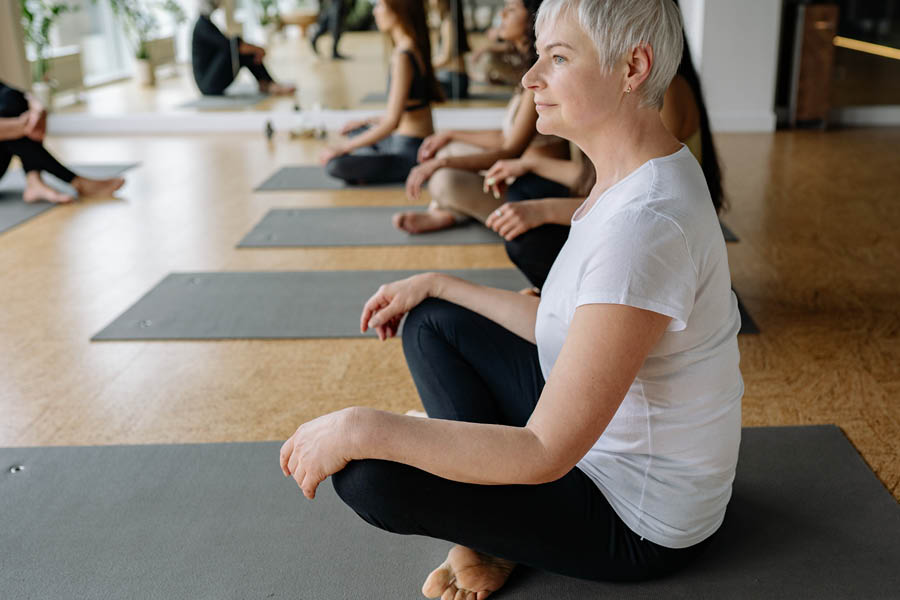
Find a Group Exercise Class
at a Location Near You
From high-energy cardio to mindful movement and pilates, there’s a class waiting for you. Find a group exercise class near you and get started today.
Colorado Athletic Club Locations & Classes
Sports & Wellness Locations & Classes